Ultimate Turbidity Curtain Guide
Definition
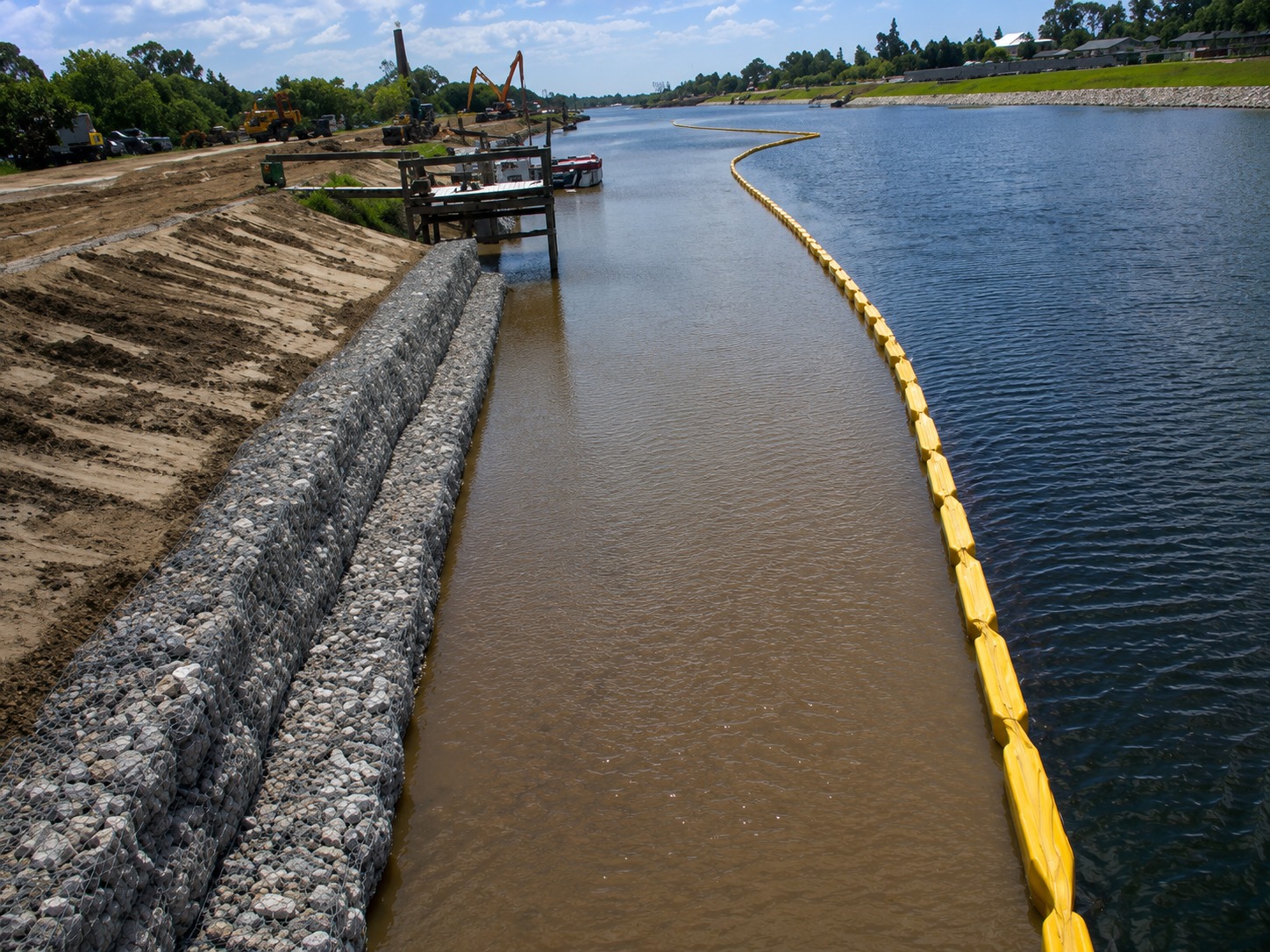
Floating turbidity curtains (a.k.a. turbidity barriers, silt booms, sediment curtains) are a temporary in-water sediment barrier consisting of a continuous geotextile fabric curtain suspended from a flotation device on the water surface and held in a vertical position by ballast weight at the bottom.
Purpose
To provide erosion and sediment control from an up-slope land disturbance, or within a body of water during marine construction projects, thereby preventing anything from floating downstream and affecting marine life.
Anatomy of a Turbidity Curtain
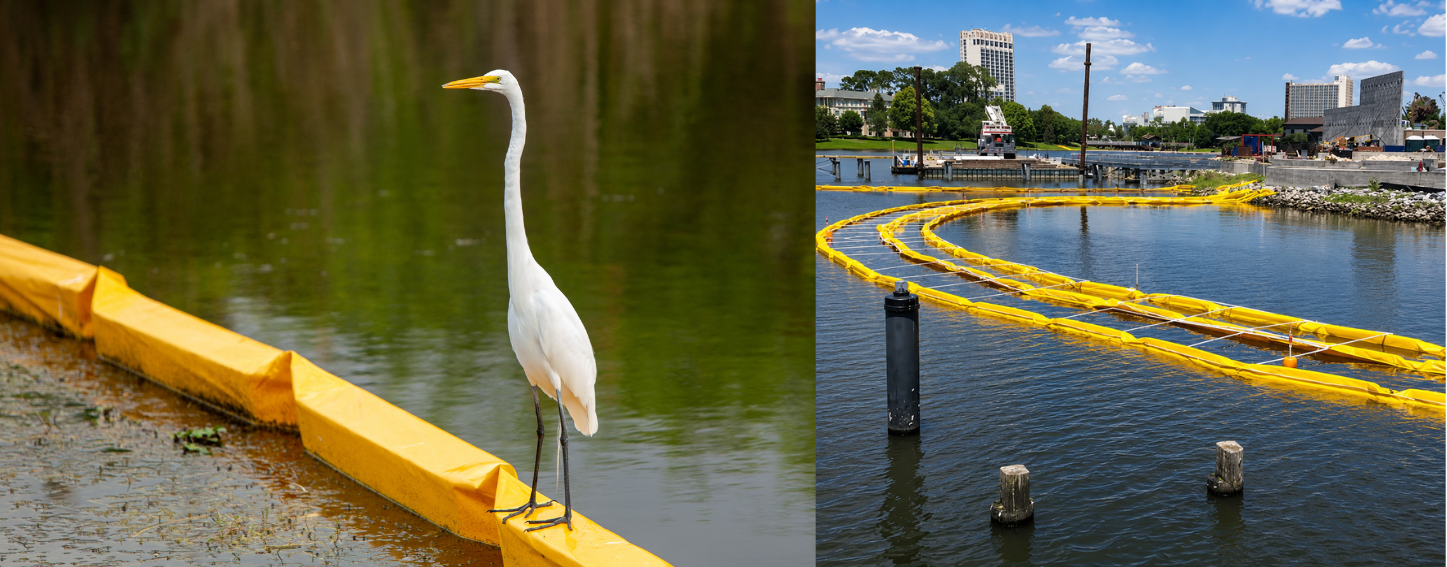
A turbidity curtain is built from several components that work together to float, hold shape, and contain sediment.
Flotation System: Buoyant units in a sleeve along the top of the curtain, sized to keep at least 3 inches of freeboard above water.
Curtain Skirt: The fabric wall that hangs below the float. Permeable skirts let water pass while trapping sediment; impermeable skirts block flow entirely for still-water containment.
Top Load Line: A vinyl-sheathed steel cable (10,000+ lb break strength) running along the top of the curtain, required on Type 2 and 3 curtains to handle current and wave loads.
Bottom Load Line (Ballast Chain): A chain sewn into the bottom hem that weighs the skirt down and keeps it hanging vertically.
Seams and Connectors: Thermally welded or sewn seams, joined between sections with ASTM universal connectors, pins, and shackles.
Anchoring Hardware: Land anchors (auger, rope, connector) for calm water; water anchors (grappling/plow/fluke anchor, chain, buoy) for moving or tidal water.
Tidal Compensators: Manage anchor line slack so the skirt stays at a consistent depth as tide rises and falls.
Marker Lights and Buoys: Bright colors and, where required, lights and buoys for boater visibility and safety.
Conditions Where Practice Applies
Erosion and sediment control practices are used whenever construction activities in tidal or non-tidal bodies of water lead to unavoidable silt and sediment movement.
Planning Considerations
Marine construction, installing a pier, dredging, repairing a seawall, etc, typically causes soil erosion into a body of water, as can land-based runoff from hill erosion, which leads to suspended particles in the water. Depending on the current or wave action, this suspended sediment can travel small or large distances and affect water turbidity and marine life, including fish feeding behavior. For one example, salmon need clear water to see their prey, such as aquatic insects, yet many of these prey feed on suspended organic particles that cloud the water. Additionally, high turbidity blocks sunlight, preventing seaweed and algae, the primary producers of the entire aquatic ecosystem, from photosynthesizing. This can destroy entire food chains. The purpose of a turbidity curtain, then, is to deflect and contain sediment within the immediate designated area.
During the planning phase, one of the key factors in designing the correct turbidity curtain is water flow conditions. This guide pertains mostly to minimal or moderate flow conditions, such as 5 feet per second (approximately a 3 knot current). It is recommended to consult GEI for situations with water flow exceeding 5 feet per second. Another critical element is the water direction. Because turbidity curtains are not dams and are not designed to stop water flow, but are instead designed to trap sediment, they should rarely be installed across channel flows.