
Oil spills are a major environmental concern. They threaten marine life and coastal ecosystems. But fear not, oil booms are here to save the day!
These floating barriers are the unsung heroes of oil spill response. They contain and control the spread of oil on water surfaces.
Oil booms are essential tools for environmental protection agencies. They help minimize damage and make cleanup efforts more manageable.
In this article, we’ll explore the purpose and function of oil booms. Get ready to dive into the world of oil spill containment!
What Are Oil Booms? (Oil Boom Definition)
Oil booms are ingenious devices used in environmental protection. Floating effortlessly, they form barriers on water surfaces. Their primary duty is to contain oil spills.
Crafted from resilient materials, oil booms are designed for diverse conditions. These materials include plastic, metal, or fabric. They must withstand harsh environments while performing their vital role.
Here’s a quick breakdown of the essential attributes of oil booms:
- Block the spread of oil spills
- Serve as the first line of defense
- Suitable for oceans, rivers, and lakes

Oil booms are vital in safeguarding marine ecosystems. Without them, cleaning up oil spills would be far more challenging. They remain crucial in global efforts to combat environmental pollution.
How Do Oil Booms Work?
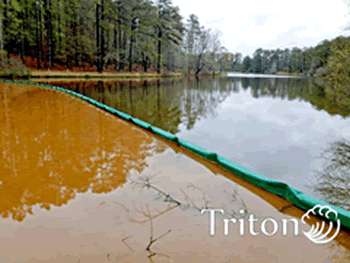
Oil booms operate by creating a physical barrier on the water. This barrier prevents oil from spreading further. Containing the spill simplifies the cleanup process.
Booms can be deployed swiftly, thanks to their adaptable design. Their effectiveness hinges on deployment conditions. The water’s state and the oil type play critical roles.
Here’s how booms function in real-world scenarios:
- Float on water to limit oil spread
- Contain oil to assist cleanup efforts
- Work in various water conditions
Types of Oil Booms
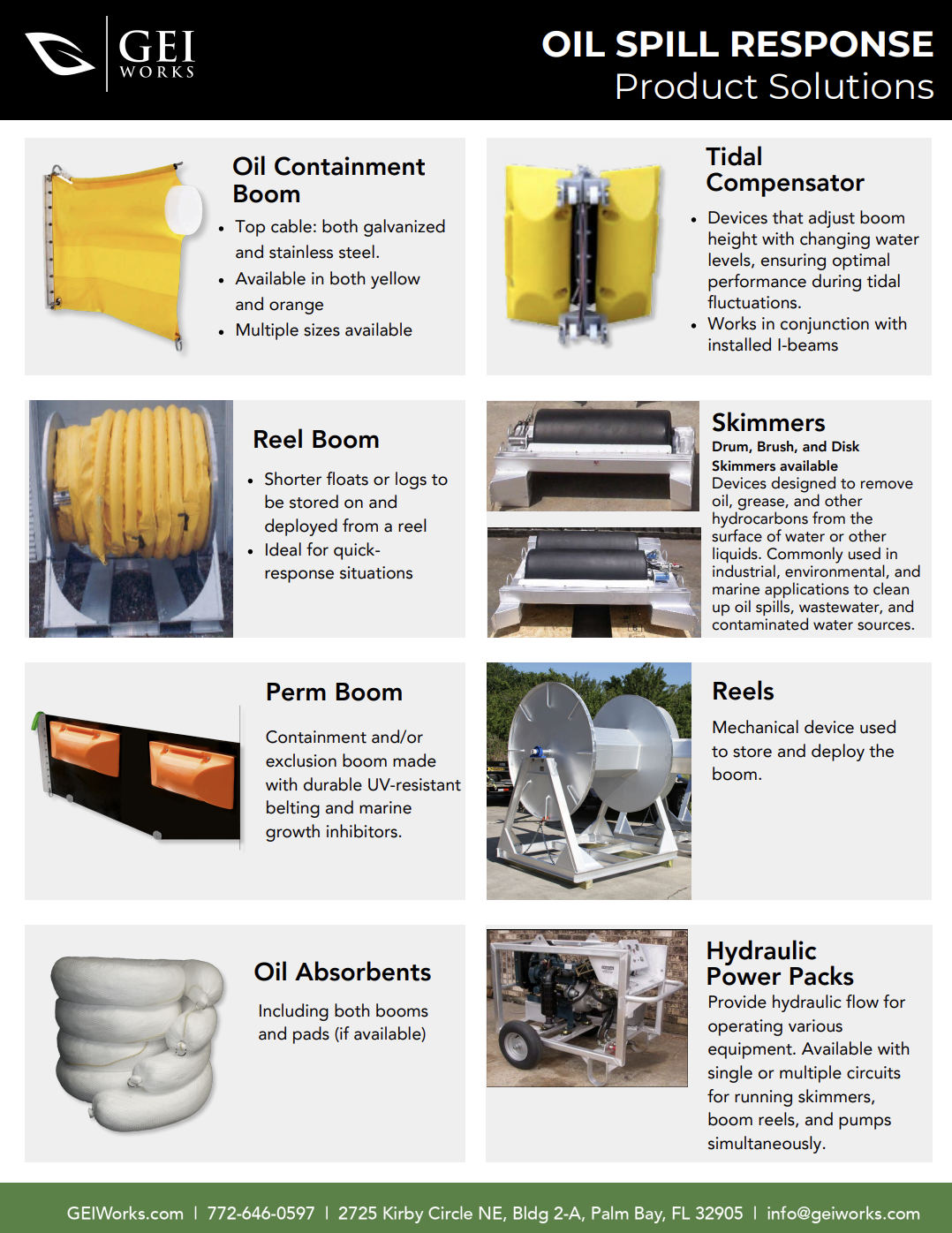
Oil booms come in various forms, each serving a unique function. Choosing the right type is crucial for effective spill response. Different scenarios demand different boom types.
Let’s explore the primary types of oil booms:
- Containment Booms: Used to stop oil from spreading.
- Absorbent Booms: Designed to soak up oil and aid cleanup.
Selecting the appropriate boom depends on several factors. Water conditions, oil type, and the spill’s scale all influence this decision. Tailoring the response enhances efficiency. Booms are essential in safeguarding marine environments. Thus, understanding their diversity is key to successful oil spill management.
Where and When Are Oil Booms Used?
Oil booms serve various environments to tackle spills efficiently. Their deployment is widespread in multiple settings due to their versatility.
Common locations for using oil booms include:
- Oceans: Vast and challenging, requiring robust containment.
- Rivers and Lakes: Smaller areas where precision is needed.
- Ports and Harbors: Busy areas prone to leaks.
Their use is essential during emergencies. Quick deployment helps mitigate environmental impacts. Being prepared to act fast ensures booms are ready when needed most. Proper usage can protect ecosystems and livelihoods from oil damage.
Key Benefits and Limitations of Oil Booms
Oil booms offer several advantages in oil spill management. They are effective and reliable tools for containing spills.
Key benefits include:
- Environmental Protection: Safeguarding marine life and ecosystems.
- Quick Deployment: Ready for immediate response.
- Cost-Effectiveness: Affordable relative to damage costs.
Despite their benefits, oil booms have limitations. Effectiveness can vary based on water and oil type. Additionally, challenging conditions such as rough seas may hinder their efficiency. Regular maintenance is also necessary to ensure optimal performance.
Oil Booms in Action: Real-World Impact
Oil booms have played pivotal roles in numerous oil spill incidents worldwide. In the Gulf of Mexico, during the infamous Deepwater Horizon spill, oil booms were critical in containment efforts. They minimized environmental damage by reducing oil spread across the waters.
These efforts underscore their importance in emergency responses. Oil booms’ real-world utility is evident in safeguarding coastal and marine ecosystems. They remain indispensable in oil spill management and environmental preservation.
Contact GEI Works for Oil Spill Product Solutions
View our solutions below and contact us at 772-646-0597 or o send us an email at the bottom of this page.